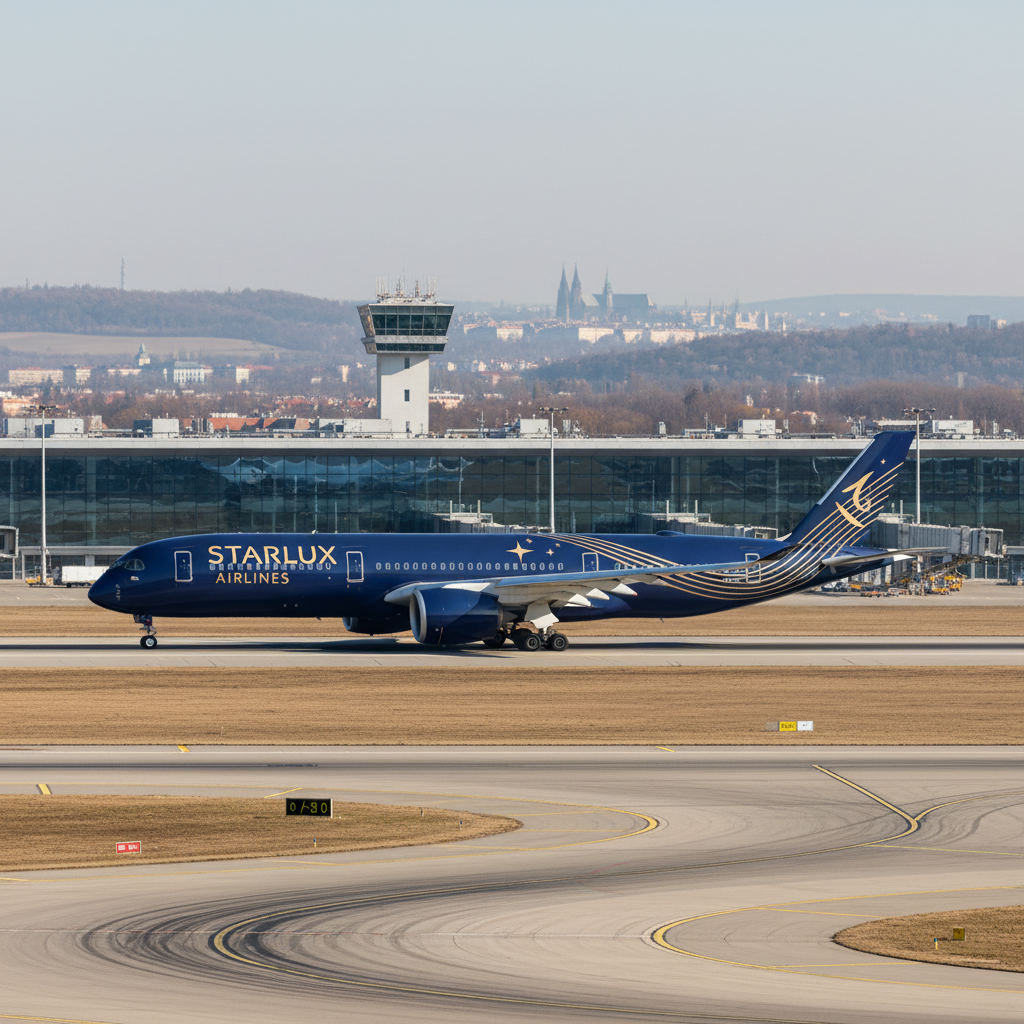
Why Starlux Airlines Chose Prague as Its First European Destination
A Strategic Entry Into Europe
Taiwan-based Starlux Airlines is set to launch its first European route to Václav Havel Airport Prague (PRG) later this year, marking a notable choice given the airport’s profile. Despite not being a major hub in Europe, Prague has attracted attention as Starlux’s initial entry point into the continent.
Prague Airport’s Unique Position
Prague’s airport primarily supports regional flights and has limited long-haul connections. Its existing long-distance routes include seasonal summer flights to three US cities and less frequent services to three destinations in East Asia, none operating daily. This sets it apart from larger European hubs typically favored for new intercontinental routes.
Strategic Considerations Behind the Decision
The decision by Starlux Airlines to select Prague reflects strategic considerations beyond the airport’s current long-haul traffic volume. Prague offers a balance of growing business ties, tourism appeal, and an underserved market for direct flights to Taiwan, which could foster increased tourism and business exchanges.
Prague as a Central European Gateway
Additionally, Prague’s location in Central Europe provides convenient access to surrounding countries, potentially positioning it as a gateway for passengers traveling further within Europe. This aligns with Starlux’s growth ambitions and desire to establish a foothold in the European market through a city that combines cultural significance with emerging travel demand.
Evolving International Air Travel Dynamics
The upcoming route launch underscores the evolving dynamics in international air travel, where emerging carriers seek alternatives to traditional hubs to carve competitive advantages. Starlux Airlines’ move highlights how airports like Prague can become strategic launchpads for expanding global connectivity.
Conclusion: Market Potential Over Hub Status
In summary, Prague’s selection as Starlux Airlines’ first European destination is driven by its market potential, geographic location, and growth prospects rather than its current status as a major long-haul hub. This venture could pave the way for enhanced air links between Taiwan and Central Europe, benefiting economic and tourism development in both regions.